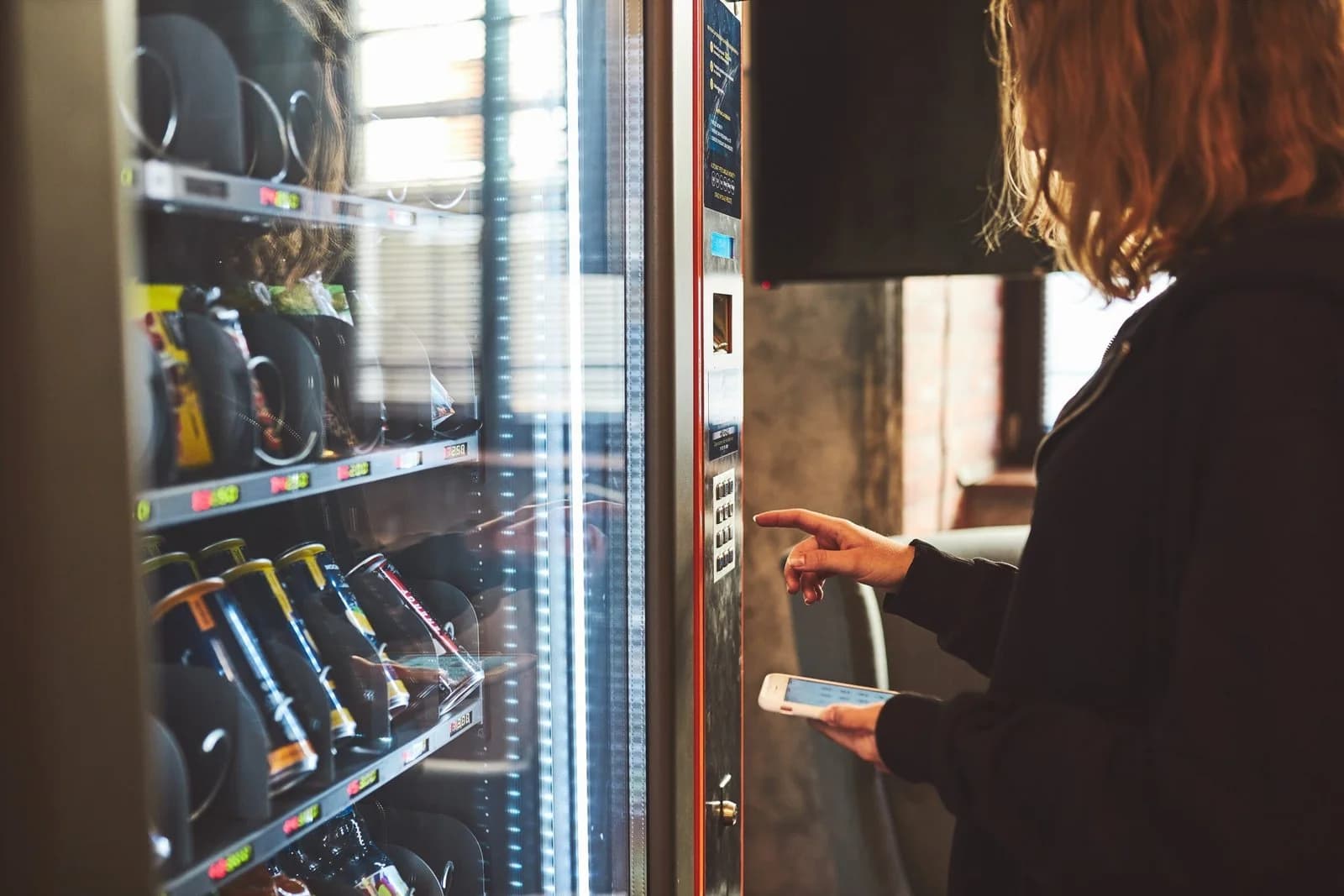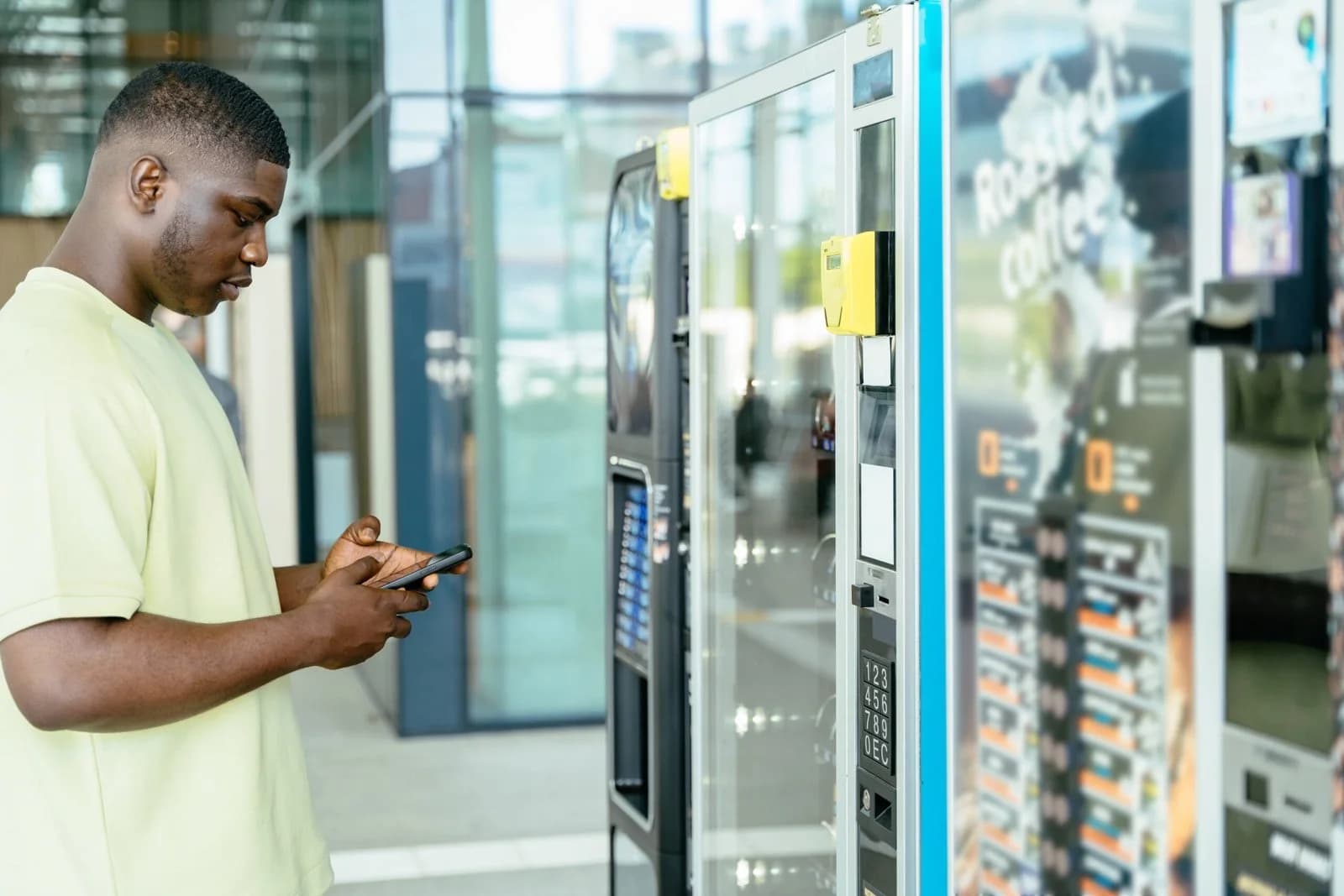
An AI smart machine records what each customer takes, which makes paying and restocking simpler. There are two common types.
Smart coolers
The customer taps a card or phone to open the door, takes what they want and closes it. Cameras or weight sensors detect what left the shelf and the card is charged. With no spirals, a cooler can sell larger or irregular items such as salads, meal bowls and large drinks.
Connected machines
A traditional spiral machine also counts as smart when it reports sales, stock levels and faults over Wi-Fi or a cellular modem. The operator sees which slots are empty before the trip, so restocks are shorter and products don’t sit sold out.
Advantages
- Cashless. No coins to count and no bill validator to jam.
- Wider range. Fresh food and larger items fit without spirals.
- Fewer wasted trips. Stock data shows what to bring.
- Less theft. Every door opening is linked to a payment card.
Drawbacks
- They need a reliable internet connection on site.
- They usually cost more upfront than a traditional machine.
- Customers without a card or phone can’t buy.
Which to choose
Smart coolers suit offices, gyms, condos and hotels, where people pay by card and want fresh options. A traditional snack or combo machine is the better choice for cash-heavy sites, low-traffic spots and rough environments such as busy warehouses. Many operators run both.
Contact us about AI smart options, or browse the machines in stock.
Our team replies to questions within 1 business day.